The following account was assembled from notes taken at Slurp and Blush on the afternoon of 4 April 2026, where this correspondent happened to be present when Martin arrived, visibly aired, carrying a tarpaulin. He relayed it was required to attempt to further seal underfloor mould now surfacing in scattered black rings on the surface of his 40 plus year old carpet and for a "breather".
Martin has been super busy. This was immediately apparent from the tarpaulin.
He had, he explained, spent the better part of the morning locked inside what he described as a Broadcom WiFi Prison, an Apple Bootloader Maze and Clonezilla runaround — the latter of his own partial construction, which he felt was worth clarifying five minutes later. There was no protocol for dismantling it. There never is. He winged it. Flailing, Falling and Faltering, he said, with the satisfaction of a man who has learned to treat low-value testing protocols the way a juggler treats a dropped club — you pick it up and have another go.
He ordered a citron pressé. It was available. Things were already looking up.
"I was feeling a bit like like a ball bearing in one of those "pigs in clover" hand games that gets stuck in a non existent corner" and during one particularly insightful mutual stuck period — the kind that feels, he followed, "a bit like a hospital waiting room, except mouldier" — a memory had surfaced. Berlin, 2012. A small rock found in front of the Brandenburg Gate, just after his parents had boarded a train for Denmark, an event that had nearly concluded with an international incident of the most significant proportions when some thoughtless soul blocked the exit and the carriage doors literally shaved his arm as he leapt back onto the platform.
"After that", Martin said, "I decided catastrophising was no longer for me. Drama — Philippe Genty style, generous quantities of absurd surrealism and theatrical nonsense — is far more entertaining".
The rock had been taken into the Room of Silence beside the Gate. A message had been imprinted on it. Binary. Quartz-like in its simplicity. He could not remember whether he had left it there or lobbed it with a dramatic flourish back to where he had picked it up. He leaned toward the latter. Almost fourteen years to the day, it had come back to him.
"The silicone chip was struggling", he said. "The quartz in the rock, wherever it is, was humming".
One is compelled to note here — because Martin did — that mould is not merely an irritant. It communicates. Professor Andrew Adamatzky's 2022 study found that electrical spiking patterns in mycelium form clusters that statistically resemble human language structures. The mycorrhizal network — that vast underground Wood Wide Web threading through root systems across entire ecosystems — operates on the same principle as quartz data storage: information carried through electrical signal, chemical relay, structural memory. The mould in Martin's carpet was not only decomposing. It was transmitting. "Its primary message on this occasion", Martin noted, "was olfactory. Not unlike a cologne-laden real estate agent wearing considerably more than the situation requires. Paranoid, perhaps, that something rotten at their core might otherwise make itself known. Similar principle. The mould, at least, doesn't pretend".
The scientific community's response was measured. Dan Bebber of the University of Exeter apparently noted the interpretation was 'somewhat overenthusiastic' and suggested the data would require significantly more hypothesis testing before anyone considered adding a handful of the 100,000 known Fungus species to Google Translate. Martin found this entirely reasonable. He had lived with mould for months and it had never once attempted small talk.
The carbon HEPA purifiers were not catching it. Further sealing of the carpet was required. Fortunately, some kind soul had recently left a selection of tapes at his front door. "Probably a neighbour", Martin said, with the equanimity of a man for whom adhesive ribbon has become something beyond a devotional practice.
Fresh air was eventually indicated. Martin walked.
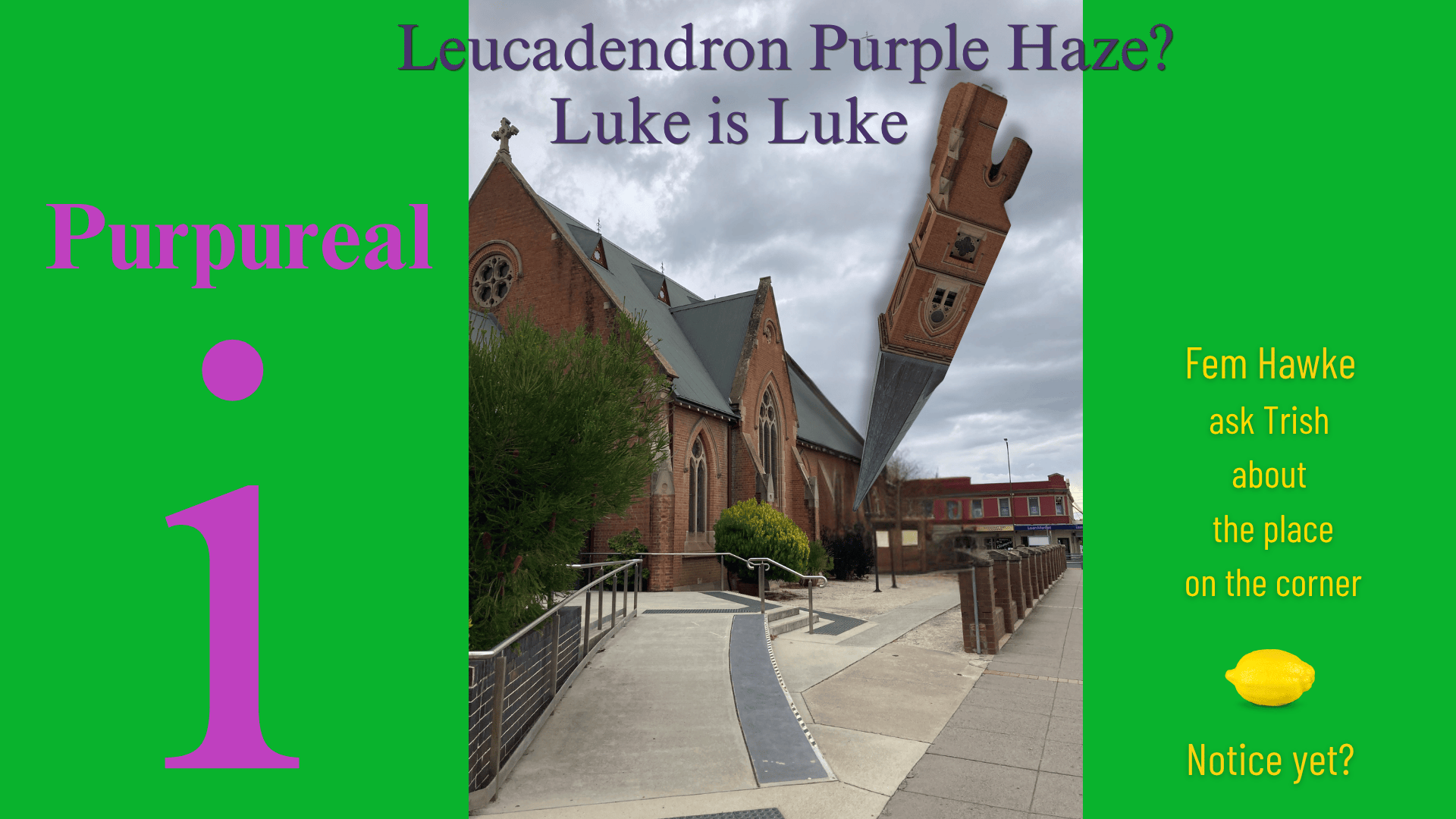
He considered, he said, whether a recreation of the roller skating sequence from the Xanadu music video would be appropriate past the currently double-fenced Cathedral. He decided against it — primarily on account of the phlegm that was, he was relieved to report, finally beginning to loosen. He had, however, identified the precise location for a spittoon into which he could hack some of it up that fortunately was finally loosening in his chest. "There will be time", he said, with the stately patience of a man who has learned to schedule his Xanadu moments, "when there is less phlegm".
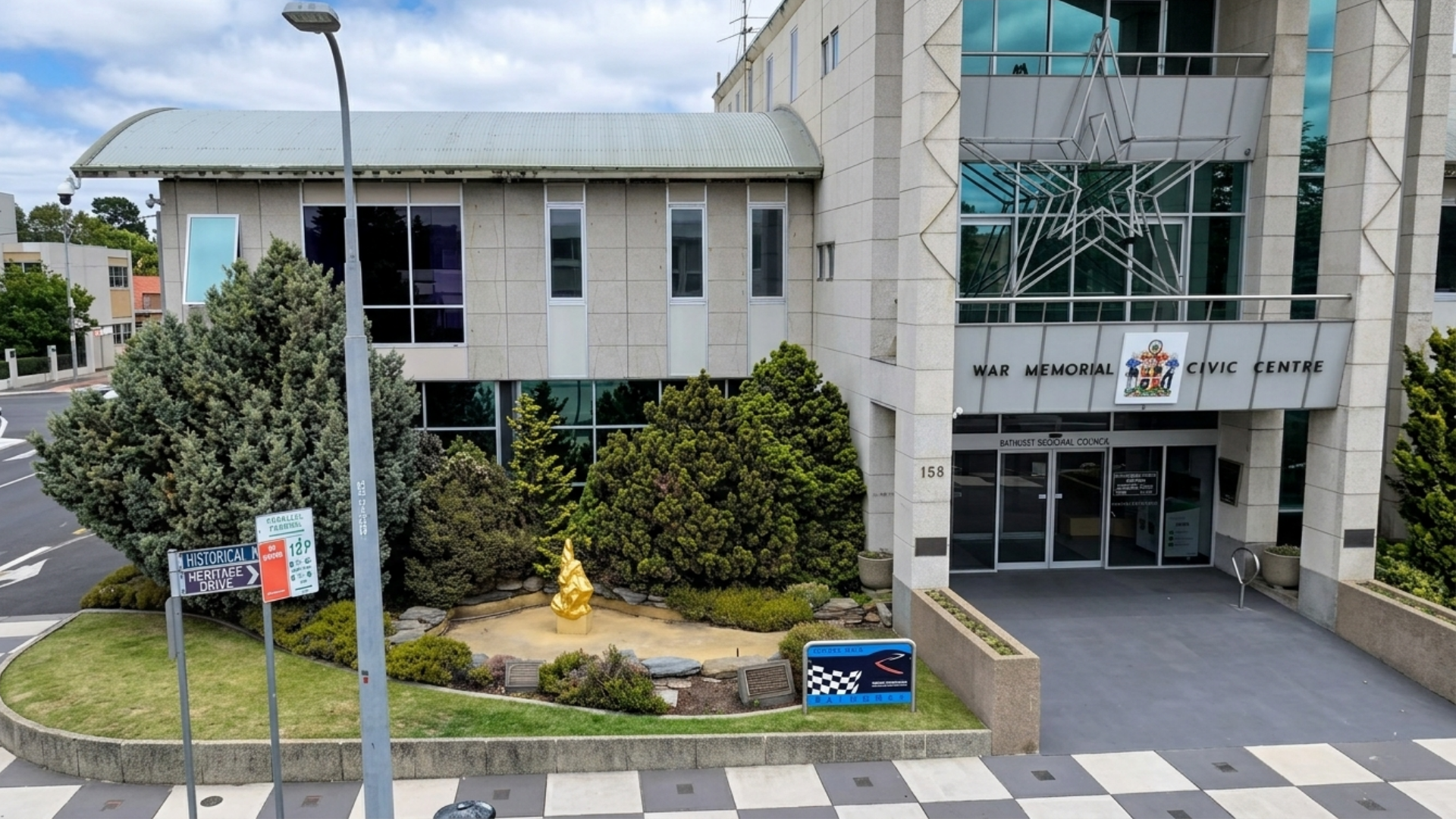
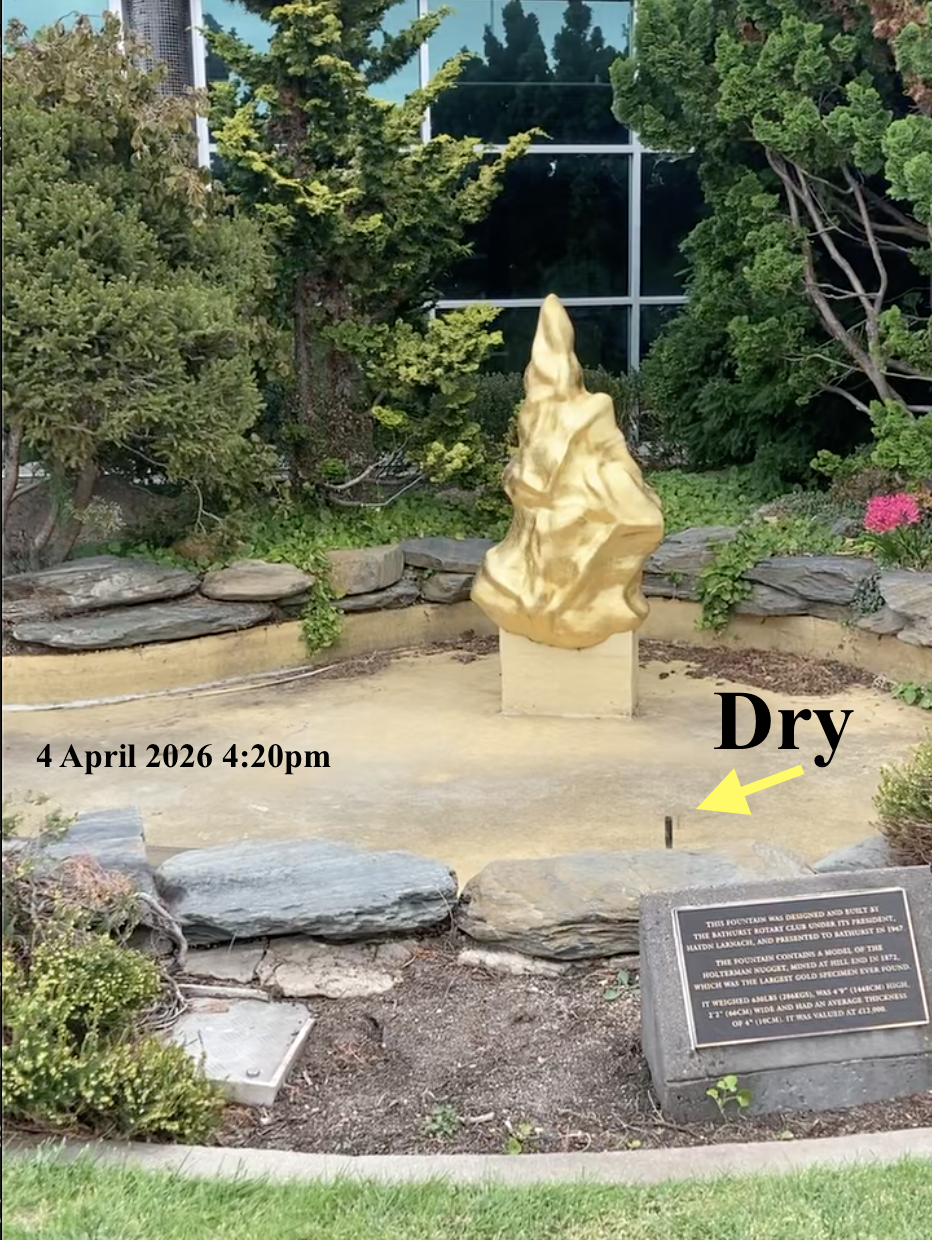
Past the Lest We Forget Carillon. Past the Council Chambers — Martin had written to the Mayor a fortnight earlier and received a reply a few days later, details of which he declined to elaborate on beyond a look that communicated everything. And there it was. The fountain. The one he had been meaning to inspect properly for over a year, noticed in passing and filed with the precision that characterises everything Martin files: accurately, indefinitely, retrievably. What he had filed, it turned out, was not quite the thing. The basin was dry. The centrepiece, on closer inspection, was a replica of something that had never looked like this — the Holtermann specimen being, technically, a mass of quartz and slate with gold embedded in it, found underground, grey and irregular and nothing like gold from the outside. The plaque clarified this. The painter of the gold did not get the memo.
"I literally stumbled", he said. An elderly man walking past said, kindly: "Watch your step".
The fountain contains, the plaque advises, a model of the Holtermann Nugget — which is not, the plaque further clarifies with the quiet satisfaction of a correction that has waited 154 years to be delivered, technically a nugget. It is a "specimen". A mass of gold embedded in quartz and slate, discovered at 2am on the 19th of October 1872 in the Star of Hope mine at Hawkins Hill, Hill End, after a midnight firing of explosives revealed what the miners described, with the understatement of men standing in front of a wall of gold, as a wall of gold. It weighed nearly 300kg (630 pounds). It stood nearly five feet tall. 93 kilograms of pure gold within. The largest single mass ever found on earth — a record that reportedly still stands?
He had been meaning to pitch a tent nearby once while at university on some trek. He couldn't. The reasons were his body's, not his.
It was crushed and melted down almost immediately.
Bernhardt Otto Holtermann, the mine manager, offered £1,000 above its estimated value to buy it whole and preserve it. He was turned down. It was shipped out. Holtermann resigned, built a mansion in North Sydney, took up photography, and together with Charles Bayliss produced what became the largest glass plate negatives of the nineteenth century — a photographic record of the New South Wales goldfields so comprehensive it is now UNESCO-listed. The archive was found in a garden shed in Chatswood, eighty years after his death.
"What's in them", Martin said, not as a question.
Indeed.
The nugget itself situated at the entrance of the council offices was apparently presented to Bathurst in 1967. The 'replica' at its centre has been painted gold in the last 15 or so years — and here one is required to be as precise as possible — in the manner of someone who selected the cheapest gold paint available and applied it with the cheerful confidence of civic duty discharged. It has, Martin observed, "the particular shimmer of a turd that has been painted gold and placed on a plinth in the sincere belief that this constitutes a tribute". A gesture at least. Enormously well-intentioned. The largest gold specimen ever found, reproduced in resin, painted optimistically, and presented to a city that has since, in the fullness of time, allowed its basin to run dry.
Dry.
Martin was already on his way to Aldi.
The middle aisle did not deliver the tarpaulin — so several pre-cooked rice packs for his mother and a box of frozen ribs it was. She had been in surprisingly friendly form on the phone earlier that day. Some kind words had been mutually exchanged. She asked several times at the end whether it was Martin she was talking to. This no longer upsets him the way it once did. The ribs were for his birthday lunch on Tuesday.
A large roll of rigid strapping tape was also secured, useful for the recent return of his wobbly boot syndrome and a welcome addition to the collection. Still no red.
Further down the road "The Champions" at the Reject Shop yielded the tarpaulin with surprising agreeableness. The vacant fancy florist shop looked sad. "I could do something with that", Martin said, in the tone of a man who genuinely could and is making no promises. The big blue "sign" next to the exhaust vent. Oh dear - still at it. The double-fenced Cathedral opposite the Carillon looked sadder. "Only a few kind lies", he observed, between it and the street.
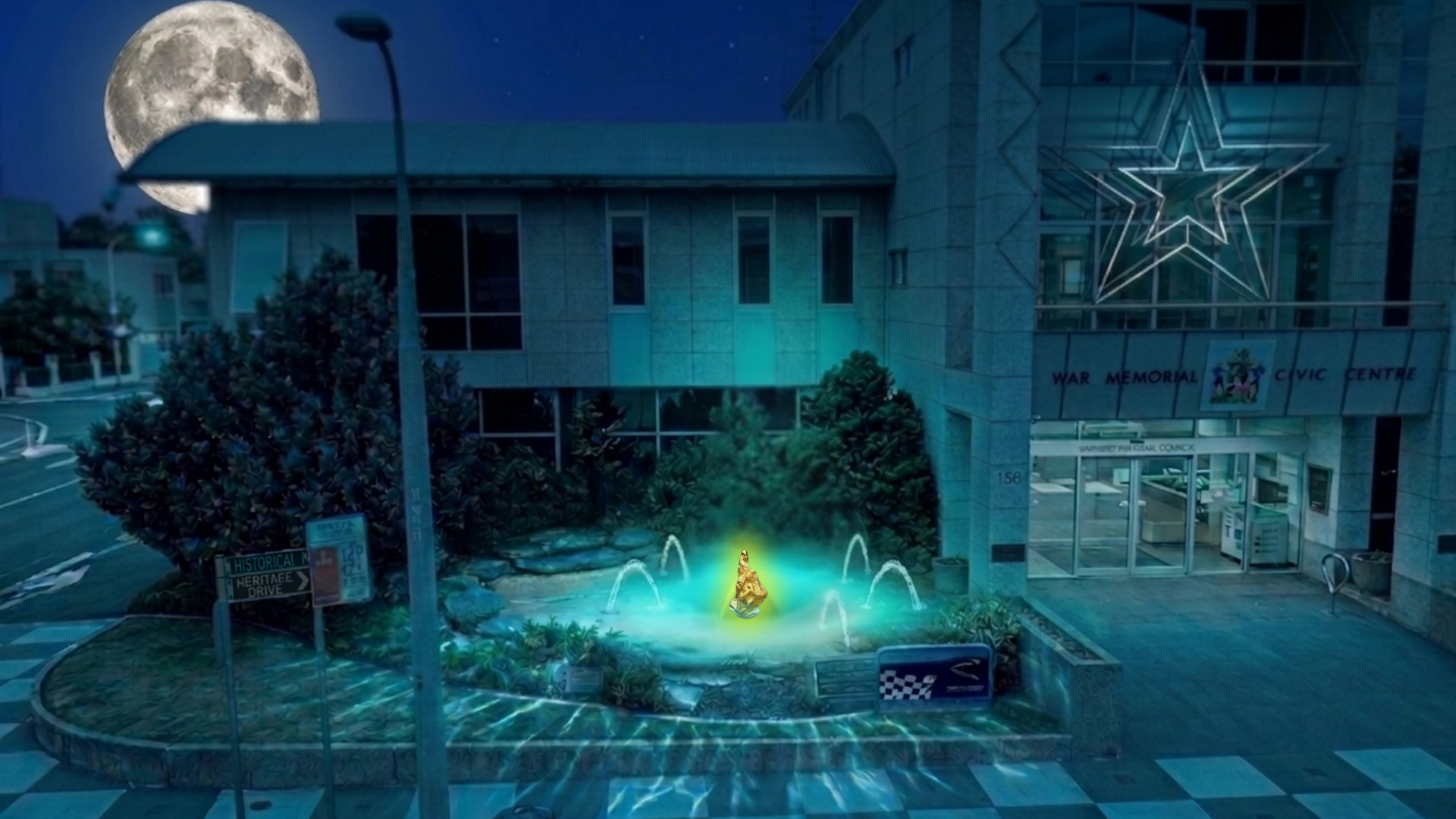
A midnight jaunt with some gold leaf, he concluded, may be in order. For the outer temporary fence. And while he was at it — the fountain. A very long hose, a few starry night projectors, a long yellow extension lead and a 50 buck solar pump tucked discretely somewhere perhaps too? The follow-up to the Mayors response had only been sent at 4.20pm on the day before Good Friday so... Today was Easter Sunday.
What the current took, the current gives back.
Martin, of course, ordered poached.
"Splosh"