There's a particular species of isolation that comes not from being alone, but from being the only one in the room who sees what's plainly visible. Hannah Arendt called it epistemological loneliness - the profound disconnect that occurs when your understanding of reality diverges so completely from those around you that meaningful communication becomes impossible. She was writing about totalitarianism and the way authoritarian regimes fracture individual thought, but the concept extends far beyond politics. It lives in every examining room where a patient's lived experience meets a physician's dismissive certainty.
I've spent decades inhabiting this particular form of loneliness. I've been documenting patterns in my own body since childhood, watching cause and effect play out with the regularity of tides and the isolated singularity of Étretat's Needle. When you encounter medical professionals who simply cannot - or will not - see what you see, you begin to understand something about the violence of institutional blindness. Not the dramatic kind, but the everyday erasure of knowledge that doesn't fit the approved "would you like a pen with that" narrative.
I had a Proustian moment the other week, where the smell of artificial apple scent triggered a fond childhood memory. Rare because nearly all of those scents send me into an anaphylactic-type reaction involving asthma, throat and chest constriction. I thought I would explore why he is regarded as the master of involuntary memory. Proust himself had severe asthma from age nine, documented hay fever and an extensive list of symptoms including neurasthenia, temperature dysregulation and chronic insomnia - conditions his clinicians dismissed as nervous disease rather than recognising the physiological reality he was managing.
Proust also understood this isolation better than most. His narrator in In Search of Lost Time spends years recognising patterns in memory, sensation and time that others miss entirely - not through superior intellect, but through sustained attention to phenomena that most people don't consider worthy of notice. The madeleine dipped in tea isn't just a famous literary device; it's an illustration of how profoundly we can know something that remains invisible to others. Proust's narrator exists in a state of perpetual epistemological loneliness, surrounded by people who cannot access the reality he inhabits, not because they're less intelligent, but because they haven't lived inside the same observations.
Proust himself lived in a cork-lined room, working through the night when the world was quiet enough for his hypersensitive system to function. He wasn't being a victim, precious or eccentric - he was managing genuine physiological limitations that his contemporaries either couldn't perceive or chose to dismiss as neurotic affectation. Sound sensitivity, environmental triggers, the need to control every variable just to think clearly enough to work - these weren't character flaws. They were adaptations to a body that experienced reality differently than the accepted norm.
Here's someone with severe, documented physiological disease - allergic asthma, hay fever, chronic lung disease - being treated by the medical establishment's top experts, yet they all classified it as "neurasthenia" (nervous disease). His father literally wrote the book on neurasthenia. They pathologised what we now know was genuine respiratory and allergic disease.
And he died still working on In Search of Lost TIme, lying in an unheated room because of his sensitivities, his doctor telling him if he just worked less the influenza would clear up. The medical establishment failed him completely whilst he produced one of the greatest literary works of all time by paying exquisite attention to exactly the kinds of sensory experiences they dismissed as neurotic.
Of course I would like to see that he is me or I am him but that is beside the point because I am not.
But we have both experienced the position of a body that has been teaching us lessons that the medical establishment hasn't yet codified. When I finally discovered that diamine oxidase (DAO) supplementation and sodium cromoglycate (SCG) provided essentially instant relief after fifty years of treatment mismanagement (to put it kindly) and escalating symptoms, the reaction from some medical professionals wasn't interest - it was irritation. Not because the intervention I established had worked, but because it suggested that decades of previous treatment had been inadequate or misdirected. The patient who solves their own diagnostic puzzle becomes not a success story but a problem, someone who's disrupted their order of things.
Arendt's insight was that epistemological loneliness isn't primarily about being misunderstood - it's about the violence that occurs when institutional power insists that your reality doesn't exist. In her context, it was the totalitarian state declaring that observable facts were fiction. In mine, it is partly that, but also that current medicine maintains its orthodoxy by pathologising patient knowledge, particularly when it suits them. One that is so pervasive that even to mention it invites instant derision. The mechanism is the same: when the institution's authority depends on controlling the narrative of what's knowable, anyone who knows differently becomes a threat.
The so-called "maverick" or "revolutionary" isn't necessarily someone with wild theories - often they're simply someone who refuses to pretend they don't see what they see. Proust wasn't trying to be avant-garde when he spent years examining a moment of involuntary memory triggered by a biscuit; he was documenting what he observed with the precision available to him. The revolution was in his refusal to dismiss his own perceptions as unworthy of serious attention. This is the position of countless patients whose bodies have given them PhDs in their own conditions, only to be told by physicians with fifteen-minute appointments that their observations can't possibly be accurate or "lets explore this first".
The elaborately constructed sandwich versus the multinational slapped together sub - this is the daily calculus I wrote about in Let X = X. Do I present the full, complex truth of what I've learned through decades of observation, knowing it will be dismissed as too complicated, too self-involved or too inconvenient? Or do I reduce it to something palatable enough to be heard, knowing that the reduction strips away the very details that make it accurate? The patient who brings comprehensive documentation is "difficult". The patient who acquiesces to oversimplification gets inadequate care.
The only potential solution to this loneliness is finding others who inhabit the same reality - other individuals who've also become experts in what medicine has failed to see, other observers who recognise patterns the orthodoxy refuses to acknowledge. Not because we're smarter, but because we've had no choice but to pay attention. When your survival depends on understanding what your body is telling you, you develop an expertise that no medical degree can replicate. And when that expertise is systematically dismissed, you find yourself in that peculiar isolation Arendt identified: surrounded, yet utterly alone in what you know to be true.

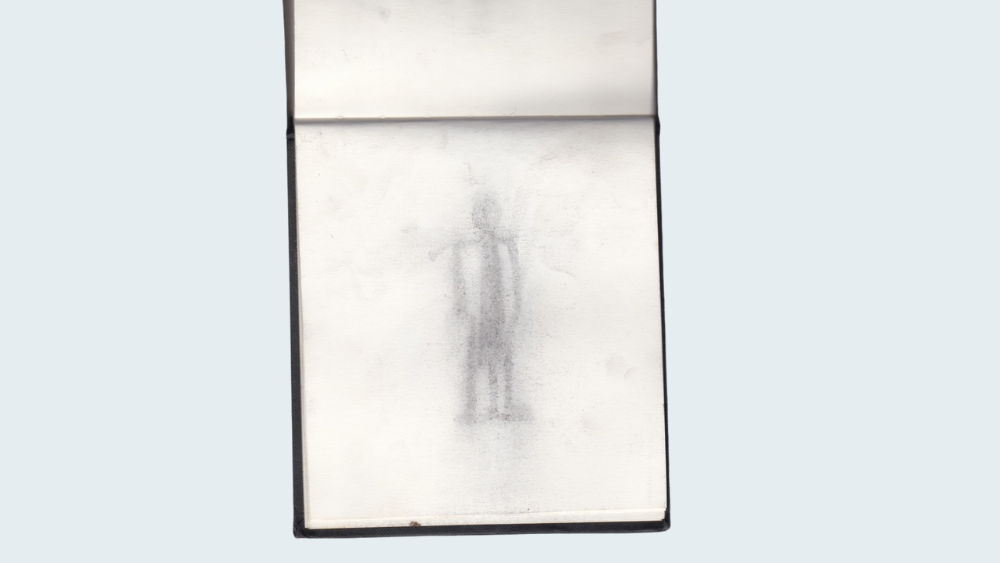
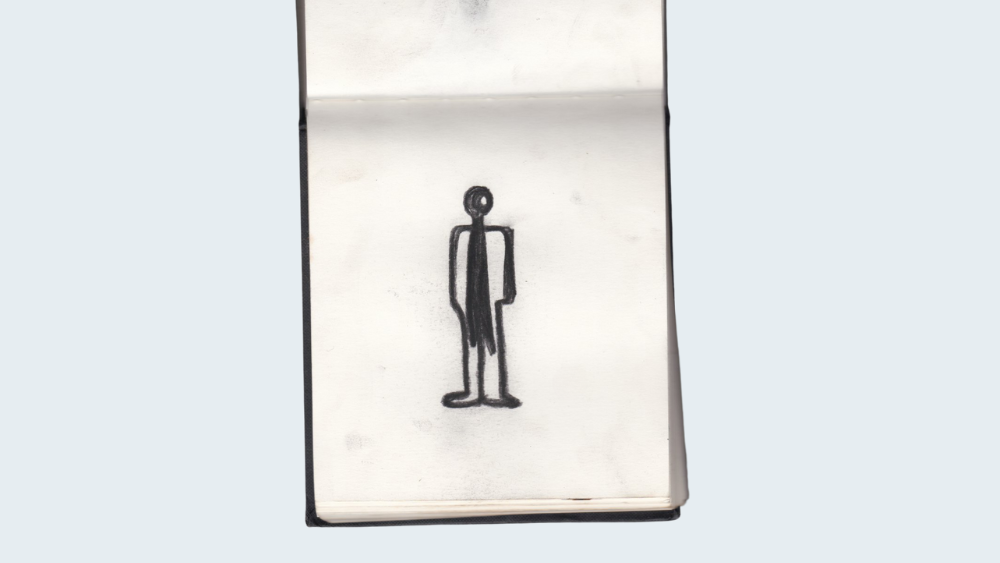
The Étretat Needle
Proust worked through the night in his soundproofed room not because he was indulging in neurosis, but because those were the only conditions under which his particular nervous system could function well enough to produce anything. He created the environment he needed, controlled the variables he could control and paid exquisite attention to experiences most people would overlook entirely. That's not eccentricity. That's expertise hard-won through decades of living in a body that taught him things the accepted wisdom wouldn't acknowledge.
I should say here that I'm no Proust scholar and my knowledge of Arendt comes from reading about her ideas rather than any study of her work. But sometimes you don't need to be an expert in someone's entire body of thought to recognise when they've articulated something you've lived. The cork-lined room, the epistemological loneliness - these aren't academic concepts to me. They are a Tuesday afternoon.
What I do know a bit more about is birds. So where is the canary in all this?
Male canaries are the singers - females don't sing much at all. And even male canaries don't sing constantly; they sing when they are content, healthy and comfortable. Time of day matters, stress levels matter, whether they've been fed matters.
In the mines, workers had to pay close attention to their specific bird's normal patterns and behaviour. They needed to know their canary's baseline - when it typically sang, how much, what its usual demeanour was like. It wasn't a simple binary "singing = safe, silent = danger." They had to notice deviations from that individual bird's normal state. A bird that went quiet when it would usually be singing, or became unusually subdued, or just seemed a bit off.
The miners had to develop expertise in reading subtle behavioural changes in a creature most people would dismiss as just a pretty songbird. They literally trusted their lives to that expertise - to knowing when something wasn't quite right, even if they couldn't yet detect the danger themselves.
There often was a designated "canary man" or the job fell to specific miners who had proven skill at reading the birds. It wasn't casual; it was a specialised role that required insight, training and constant vigilance. These men had to know avian behaviour, recognise subtle changes, understand the progression of distress signals. Lives depended on that expertise being taken seriously. It wasn't a situation of "Oh, the bird fell off its perch, lets get out of here!".
The parallel is structural: expertise born of necessity, observational skills most people don't possess because they haven't needed them and the question of whether that expertise gets respected or pathologised based entirely on institutional power dynamics rather than the validity of the observations themselves. The miners get an idiom, someone like me is treated like an idiot.
So the argument becomes: humans are actually naturally good at this kind of observation - we evolved to read subtle patterns for survival. But the medical-industrial complex has systematically trained people to distrust their own observations, to defer to experts even when those experts have 30 minutes (if you're lucky) and I have 50 years of solid experiential data.
The miners didn't have that problem. Their observational expertise was valued because the power structure needed them alive to keep working. But in modern medicine, patient expertise threatens the authority structure itself. Barely living will often suit just fine.
So the sensitive among us are stuck being canaries that nobody is properly watching, in a system we depend on for survival, that has successfully convinced most people (including me) that our distress signals are neurotic rather than diagnostic.
Of course, some individual clinicians resist this - nurses and doctors who actually listen, who take patient observations seriously, who haven't had their instincts dulled by the machinery. But they're working against institutional incentives that don't reward careful observation of individual patients. Exceptio probat regulam in casibus non exceptis - they are the exception that proves the rule.
And here's my dilemma: I want to say this forcefully, directly, but I have no institutional authority. No medical degree, no academic credentials, no platform that automatically confers legitimacy. But I do have evidence, a lot of it. Likely I will be dismissed again precisely because I'm speaking from the position of the observed rather than the observer.
It is only very recently that a clinician said to me "you are the expert of your own body". I optimistically interpreted that to be progressive, yet part of me feels that it is like everything else in my clinical experience - performative. Like an abuser saying 'I'm doing this because I care about you' whilst maintaining inescapable control.
The list below outlines the power of the dependency I have experienced. This would account for about 15% of my experience and is far more exhaustive but is what I am able to evidence at this time.
Systems analysis of Medical-Industrial Complex (MIC) Dynamics - Textbook:
Power imbalance:
- holds all authority - diagnosis, treatment, medication access, disability access
- Dependency for survival (medication, validation, supports)
- Can withdraw successful support/treatment at will (SCG at age 11), Barriers to access (SCG 2025)
Harm without accountability:
- Causes harm (withdrawal of effective treatment, inappropriate treatments, dismissal)
- No robust mechanism to be held accountable
- Individual actors protected by institutional structures
Gaslighting:
- Observations dismissed as anxiety, chemical imbalance or overreaction
- Evidence is ignored
- Reality denied ("the treatment we prescribed should work, so if it doesn't, you're the problem")
Reactive abuse:
- MIC harms me → I react (become 'difficult', hyper-vigilant, unable to cope → MIC blames me for being difficult
- My trauma responses used as evidence I am the problem
Feeding off reactions:
- The more I try to prove my case, the more "anxious/obsessive" I appear
- My attempts to be heard become evidence of psychiatric pathology
- MIC generates the behaviour it then pathologises
No learning/improvement:
- Same patterns perpetuated across decades
- No institutional memory of failures
- Each new doctor repeats the same mistakes
- MIC protects itself, not patients
Isolation:
- My disability has isolated me
- Lack of appropriate treatment has compounded isolation
- MIC failures isolate me from care
- Isolation increases vulnerability to further harm
Economic control:
- MIC controls access to medications, treatments, funding
- I am dependent on DSP, PBS, etc
- Significant financial barriers to compounding, private care, alternatives
All of this may be dismissed as 'interpretation' until you experience it in any routine consultation. If I had gone to a doctor 10 years ago and said 'when I leave the house my water tastes normal but when I come home it tastes like poison', what would they have diagnosed? What would they have done? It's a pretty usual scenario that I would have been diagnosed as psychotic, paranoid, schizophrenic, delusional or worse. They have done that anyway. So I'm glad I didn't.
Their desk is literally scattered with cheap pens for Zoloft or the like and I would have ended up walking out with a free sample pack and a script that undoubtedly would be increased in a month or two because it's not working. Lucky also, I didn't tell them about my obsession with adhesive ribbon.
How much of my reaction when this taste changed is neurological, how much psychological, how much is biological is not quantifiable. But in my case they all play a part. Background exposure on a high pollen day can tip me over the edge if my baseline is higher that day. This is often referred to as the bucket theory. If my bucket is 90% full because I accidentally ate yeast the night before then simply breathing in pollen laden air will activate not only a systemic response but a topical one. This naturally includes sneezing etc but it also (completely unknown to me until recently) activates mast cells on my tongue that when later stimulated with food or water leads to everything tasting like poison. Not a very nice experience or sensation. How could the exact same glass of water that I had a sip of 40 minutes ago now taste like it has been spiked? The imaginings of a traumatised mind in this instance was literally like binging every 86 episodes of Spooks back to back in triple time and living it in slow motion.
Following an extreme sensitisation event over 10 years ago, due to these experiences, I developed persistent thoughts of being poisoned - thoughts I was unable to rationalise that were deeply unsettling and difficult to understand. The thing is, I was being poisoned, by my own overflowing bucket rather than some external contamination.
Fortunately for me, my physiological responses can now be measured and consequently my psychological ones too. Now that I know what needs to be measured. These can now be quantified: histamine, tryptase, cytokine levels tested all framed by my extreme immunoglobulin count. My mind can rationalise now when this happens that it might just be a high pollen day or that bubble tea shop I just walked past actually did play a part.
My body was constantly defending something real, even though I couldn't explain what. I've essentially been my own misinformed guinea pig for decades, e.g. I'll try eating X + Y because I ate X last night and was fine. If I add Y tonight and break out in hives it must be Y. This could not be further from the case. There are so many variables that I never knew existed up until three months ago. Basic stuff that I have never been told about or had the energy to investigate. So now I do, I may as well be a clued in guinea pig.
Which brings me back to Proust. He didn't have medical authority when he documented his experience. He just refused to pretend he didn't perceive what he perceived. Proust unashamedly chose precision. From now on, over a century later, so do I… with receipts.